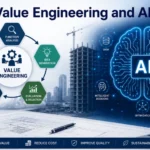



Myths and Realities of Value Engineering
More than 75 years after its development, Value Engineering (VE) remains one of the most effective methodologies for improving value, fostering innovation, and optimizing resources. Yet, despite its proven success across industries and countries, many organizations continue to misunderstand what Value Engineering truly is.
These misconceptions often prevent organizations from leveraging the full potential of the methodology.
Let’s separate the myths from the realities.
Myth 1: Value Engineering is just cost cutting
Reality
This is perhaps the most common misconception.
Value Engineering is not about reducing costs at any cost. It is about improving the relationship between function and cost to maximize value.
A Value Engineering study may recommend reducing costs, but it may also recommend investing more in areas that improve performance, reliability, customer satisfaction, safety, or sustainability.
The objective is not to spend less.
The objective is to achieve the required functions at the optimum life-cycle cost.
Myth 2: Value Engineering reduces quality
Reality
A core principle of Value Engineering is that required functions must be maintained or improved.
If a proposed alternative compromises quality, safety, reliability, or performance, it does not create value.
In many cases, VE studies actually lead to better quality outcomes by eliminating unnecessary complexity and focusing on what truly matters to users and stakeholders.
Myth 3: Value Engineering is Only for Construction Projects
Reality
While VE is widely used in construction and infrastructure projects, its applications extend far beyond engineering and design.
Today, Value Engineering is successfully applied in:
- Manufacturing
- Healthcare
- Government programs
- Information technology
- Education
- Transportation
- Energy
- Product development
- Social development initiatives
- Startups and MSMEs
Any product, service, process, policy, or system can benefit from a Value Engineering approach.
Myth 4: Value Engineering is only relevant during design
Reality
Although the greatest savings opportunities often exist during the design stage, VE can be applied throughout the entire life cycle of a product, service, or project.
Organizations use Value Engineering during:
- Planning
- Design
- Procurement
- Construction
- Operations
- Maintenance
- Process improvement
- Digital transformation
Value creation opportunities exist at every stage.
Myth 5: Value Engineering is a one-time exercise
Reality
Value Engineering is most effective when embedded as a culture of continuous value improvement.
Organizations that consistently apply VE principles develop stronger problem-solving capabilities, foster innovation, and make better investment decisions over time.
Value creation is not a one-time event; it is an ongoing journey.
Myth 6: Value Engineering stifles creativity
Reality
The opposite is true.
Creativity is one of the foundational pillars of Value Engineering.
The VE Job Plan includes a dedicated Creative Phase where teams generate alternative solutions without immediate judgment or constraints.
Many breakthrough innovations emerge from challenging assumptions and exploring alternative ways to achieve functions.
VE provides a structured environment for innovation to flourish.
Myth 7: Value Engineering is only for engineers
Reality
Despite its name, Value Engineering is a multidisciplinary methodology.
Successful VE studies often involve:
- Engineers
- Architects
- Financial experts
- Operations managers
- Procurement specialists
- Healthcare professionals
- Educators
- Community representatives
- End users
The best solutions emerge when diverse perspectives come together to solve problems collaboratively.
Myth 8: New technology automatically creates value
Reality
In the age of Artificial Intelligence, automation, and digital transformation, many organizations assume that adopting the latest technology automatically creates value.
Technology creates possibilities, but not necessarily value.
Value Engineering helps organizations evaluate whether a technology truly improves functions, addresses stakeholder needs, and delivers benefits that justify the investment.
VE ensures that innovation remains purposeful rather than fashionable.
Myth 9: Value Engineering is difficult and time-consuming
Reality
Like any structured methodology, VE requires discipline and effort. However, the investment often yields significant returns through improved outcomes, reduced waste, and better decision-making.
Even small Value Engineering exercises can uncover opportunities that lead to substantial savings and performance improvements.
The cost of not applying Value Engineering is often far greater than the effort required to conduct a study.
Myth 10: Value Engineering has become obsolete
Reality
Far from being outdated, Value Engineering is becoming increasingly relevant.
Organizations today face challenges such as:
- Resource constraints
- Rising costs
- Sustainability requirements
- Rapid technological change
- Complex stakeholder expectations
These challenges demand a methodology that focuses on value creation, innovation, and efficient resource utilization.
The principles developed by Lawrence D. Miles more than seven decades ago remain highly relevant in today’s digital economy.
Why these myths persist ?
Many organizations encounter Value Engineering only through isolated cost-reduction initiatives. As a result, they fail to appreciate its broader role as a structured methodology for innovation and value creation.
Additionally, terms such as Lean, Six Sigma, Agile, and Design Thinking often receive greater visibility, even though Value Engineering complements these approaches rather than competing with them.
Understanding the true purpose of VE is essential for unlocking its potential.
Conclusion
Value Engineering is not merely a cost-cutting tool, a design review process, or an engineering technique. It is a proven methodology for maximizing value by balancing function, performance, quality, and cost.
The reality is that Value Engineering helps organizations make better decisions, foster innovation, optimize resources, and create sustainable outcomes.
As industries continue to evolve, one principle remains constant:
Organizations that focus on value will always outperform those that focus only on cost.
That is the enduring relevance of Value Engineering.
In a nutshell:
Myth | Reality |
VE is cost cutting | VE is value creation |
VE reduces quality | VE maintains or improves quality |
VE is only for construction | VE applies to all sectors |
VE is only for engineers | VE is multidisciplinary |
VE is a one-time exercise | VE supports continuous improvement |
VE limits creativity | VE encourages innovation |
VE is outdated | VE is highly relevant in the AI era |
Key Message:
Value Engineering is not about spending less—it is about achieving greater value through better functions, innovation, and resource optimization.